
Candidate Availing reservation Cannot be Adjusted in UR category : Supreme Court
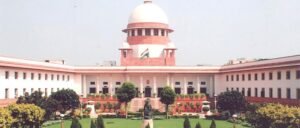
Candidate Availing Reservation Cannot Be Adjusted in UR Category
The Supreme Court has consistently clarified reservation law principles governing selection, adjustment, and eligibility across reserved and unreserved recruitment categories.
This article explains why candidates availing reservation benefits cannot claim adjustment within unreserved categories despite securing higher comparative merit positions.
The landmark judgment in Deepa E.V. versus Union of India and Others conclusively settled this important service jurisprudence issue.
The ruling has significant implications for recruitment authorities, aspirants, and litigation involving reservation misuse or incorrect category adjustment disputes.
Legal Background of Reservation Adjustment in Recruitment
Indian constitutional jurisprudence permits reservation benefits to address historical and structural disadvantages faced by specific social categories.
Such reservation benefits include age relaxation, qualification relaxation, experience relaxation, and extended consideration zones during recruitment processes.
Unreserved category selection follows uniform standards without relaxation, ensuring equal competition strictly based on merit benchmarks.
Disputes arise when reserved category candidates securing higher marks seek adjustment into unreserved vacancies post-selection processes.
Supreme Court Judgment in Deepa E.V. vs Union of India
Facts of the Case Explained
The appellant applied for Laboratory Assistant Grade II under Export Inspection Council functioning within the Ministry of Commerce.
She belonged to the Dheevara community recognized as Other Backward Class under applicable government reservation policies.
The appellant availed age relaxation permitted exclusively for OBC candidates while applying for the recruitment process.
She participated in interviews specifically under the OBC category and competed with similarly categorized reserved candidates.
The appellant secured eighty-two marks, whereas another OBC candidate secured ninety-three marks and received appointment.
Claim for Adjustment in Unreserved Category
No general category candidate achieved the minimum cutoff marks fixed for unreserved category selection during recruitment.
The appellant claimed entitlement to appointment within unreserved category based solely upon higher comparative marks.
She approached the High Court seeking adjustment under unreserved category vacancies despite availing OBC relaxation benefits.
Both Single Judge and Division Bench rejected her claim, prompting appeal before the Supreme Court.
Supreme Court’s Legal Reasoning
Principle of Uniform Standards
The Supreme Court emphasized that adjustment into unreserved category requires selection under identical standards applied to general candidates.
Any relaxation in age, qualification, experience, or selection standards disqualifies adjustment into unreserved category vacancies.
The appellant admittedly availed age relaxation, disqualifying her claim for unreserved category adjustment.
Therefore, merit comparison across different standards violates recruitment equality principles.
Government of India Office Memorandum Clarification
The Court relied upon binding government instructions governing direct recruitment across departments and public authorities.
Government memorandums clarified that relaxed standards mandate counting selected candidates strictly against reserved vacancies only.
Only candidates selected without any relaxation qualify for adjustment against unreserved category posts.
The appellant’s selection process involved relaxation, rendering her unavailable for unreserved category consideration.
Landmark Impact of the Judgment
Reservation Cannot Be Converted Post Selection
The judgment clarified that reservation category selection cannot be converted into unreserved selection after result declaration.
Allowing such conversion would undermine the constitutional balance between merit-based equality and affirmative action policies.
The ruling prevents indirect circumvention of reservation limits through post-selection category adjustments.
Recruitment authorities must strictly adhere to declared selection standards and reservation criteria.
Consistency Across Recruitment Examinations
The ruling applies uniformly to written examinations, interviews, combined recruitment processes, and all direct recruitment mechanisms.
Selection procedures must maintain categorical integrity from application stage through final appointment decisions.
Courts will not entertain claims seeking benefit from both reservation relaxation and unreserved category merit advantages.
This judgment strengthens administrative clarity and reduces unnecessary litigation.
Legal Significance for Service Matters
Guidance for Candidates
Candidates must consciously choose application categories understanding long-term consequences of availing reservation relaxations.
Higher marks alone do not override categorical standards governing recruitment eligibility.
Applicants cannot selectively invoke merit post benefiting from relaxed reservation criteria.
Legal awareness prevents misguided litigation and unrealistic expectations.
Guidance for Recruitment Authorities
Recruitment agencies must explicitly record relaxation benefits availed by candidates during selection processes.
Appointment orders should reflect category-specific selection to avoid post-selection legal challenges.
Strict compliance with government memorandums ensures transparency and constitutional compliance.
This judgment offers authoritative protection against improper category adjustment claims.
Conclusion
The Supreme Court conclusively affirmed that candidates availing reservation benefits cannot claim unreserved category adjustment subsequently.
Merit must operate within uniform standards, not across relaxed and unrelaxed selection frameworks.
The Deepa E.V. judgment preserves fairness, constitutional discipline, and recruitment integrity across public employment.
This settled legal position continues guiding courts, administrators, and service law practitioner nationwide.
Frequently Asked Questions
Can a reserved category candidate be adjusted in unreserved category after availing relaxation benefits during recruitment selection process?
No, availing any relaxation disqualifies the candidate from adjustment into unreserved category vacancies regardless of comparative merit.
Does securing higher marks permit adjustment into unreserved category despite availing reservation benefits?
Higher marks cannot override relaxed selection standards applied exclusively for reserved category candidates during recruitment.
Which Supreme Court case clarified this legal position conclusively?
The Supreme Court clarified this position conclusively in Deepa E.V. versus Union of India and Others judgment.
Does this rule apply only to OBC candidates?
This rule applies equally to SC, ST, and Other Backward Class candidates.
What types of relaxations bar unreserved category adjustment?
Age relaxation, qualification relaxation, experience relaxation, attempts relaxation, or extended consideration zones bar such adjustment.
Is this principle applicable to written examinations and interviews both?
Yes, the principle applies uniformly to written tests, interviews, and combined recruitment processes.
Can courts allow adjustment if general category posts remain vacant?
Courts do not permit filling unreserved vacancies using candidates selected under relaxed reserved category standards.
Does merely applying under reserved category bar unreserved adjustment?
Applying alone does not bar adjustment, but availing relaxation benefits certainly bars unreserved category adjustment.
Are government office memorandums legally binding in recruitment matters?
Yes, Supreme Court upheld the binding nature of government memorandums governing reservation adjustments.
Can recruitment rules override Supreme Court reservation principles?
Recruitment rules cannot override constitutional principles settled by the Supreme Court regarding reservation adjustments.
Is this judgment applicable to state government recruitments also?
Yes, state recruitment processes generally follow identical constitutional reservation principles.
Can candidates challenge denial of unreserved adjustment successfully?
Such challenges generally fail when candidates have availed any reservation relaxation during selection.
Does this judgment prevent misuse of reservation benefits?
Yes, the judgment prevents dual benefit misuse of reservation relaxations and unreserved merit advantages.
Why is legal expertise important in reservation adjustment disputes?
Legal experts ensure correct application of settled Supreme Court law in complex service recruitment disputes.
Is this judgment considered a landmark in service jurisprudence?
Yes, the judgment is landmark for preserving fairness and integrity in public employment recruitment processes.
Tags : Candidate Availing reservation Cannot be Adjusted in UR category